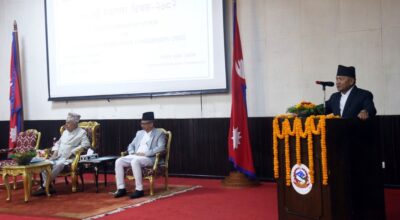


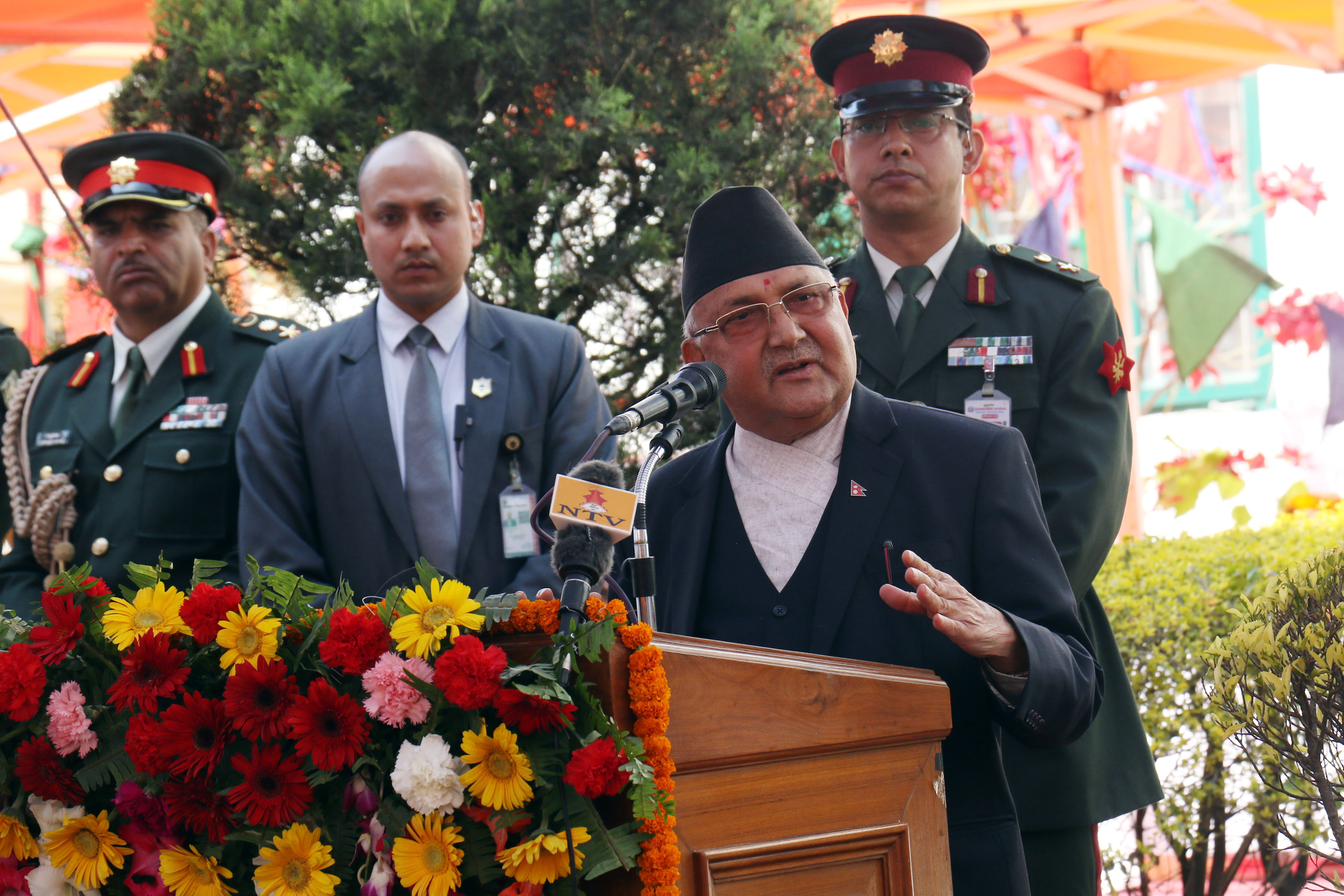

Today, the National Security Council is observing its 18th annual day i.e. the Security Council is entering into the 19th year after completing 18 years. Must say, Happy Birthday to the Security Council.
As we gather here in this annual celebration of the Security Council, celebrate the occasion as participants, we reflect, we must reflect on the meaning of Security Council, its gravity, its duties, and various dimensions of its work. 
The Security Council is basically focused on the security of the overall nation, security of the country and in the security of the country men and women. For this, the Defense Minister has already spoken in brief about the responsibilities of the Security Council. Situational analysis-what is the situation? The security of the country and its people i.e. the country’s sovereignty, its independence, territorial integrity, protection of its interests, promotion, protection of its territory, protection of rights, protection of its pride and glory. What is the situation of all these? What are the challenges that they face? What are the problems? How could they be resolved, through what means?
The Constitution clearly outlines the importance of the Security Council, and about the question of national security. From that perspective, it is the Security Council that does the situational analysis, assumption of the situation, identification of the problems and challenges, and recommends their solutions, all of these for that matter. Accordingly, it plays the role to reach the question of national security to the level of certainty. 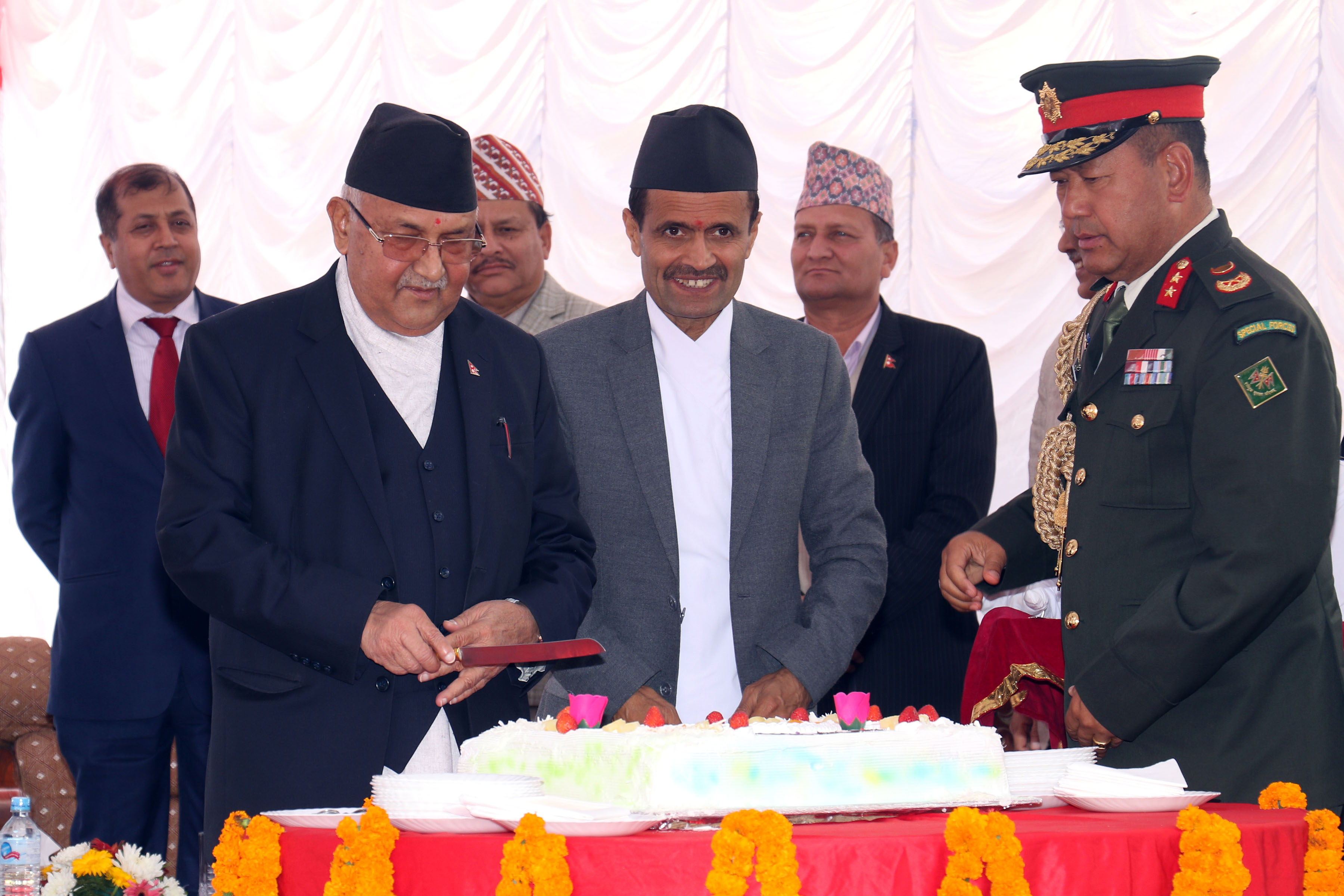
Currently, I feel that I must discuss a little about a matter, as we are observing this 18th annual celebrations, the country needs to be happy. The Security Council must be happy in the success of its work. There may be many dangers to the country, many problems, and many challenges. Of them, sometimes the challenge of disintegration, sometimes the aspiration of separation or such demand and plans may also appear. We have seen it at various points of time, in various places, and even in our country a group was active with the demand for disintegration, a separatist demand until March 8. The separatist thought, demand and movement has come to an end since March 8, which has also got an easy and happy landing. This is very good, a positive thing. If anyone tries to play with it in the middle, there will be no place to play. As a result, if anything is tried out by infiltrating into such demands or such aspirations or such movements, then it will not be possible now. 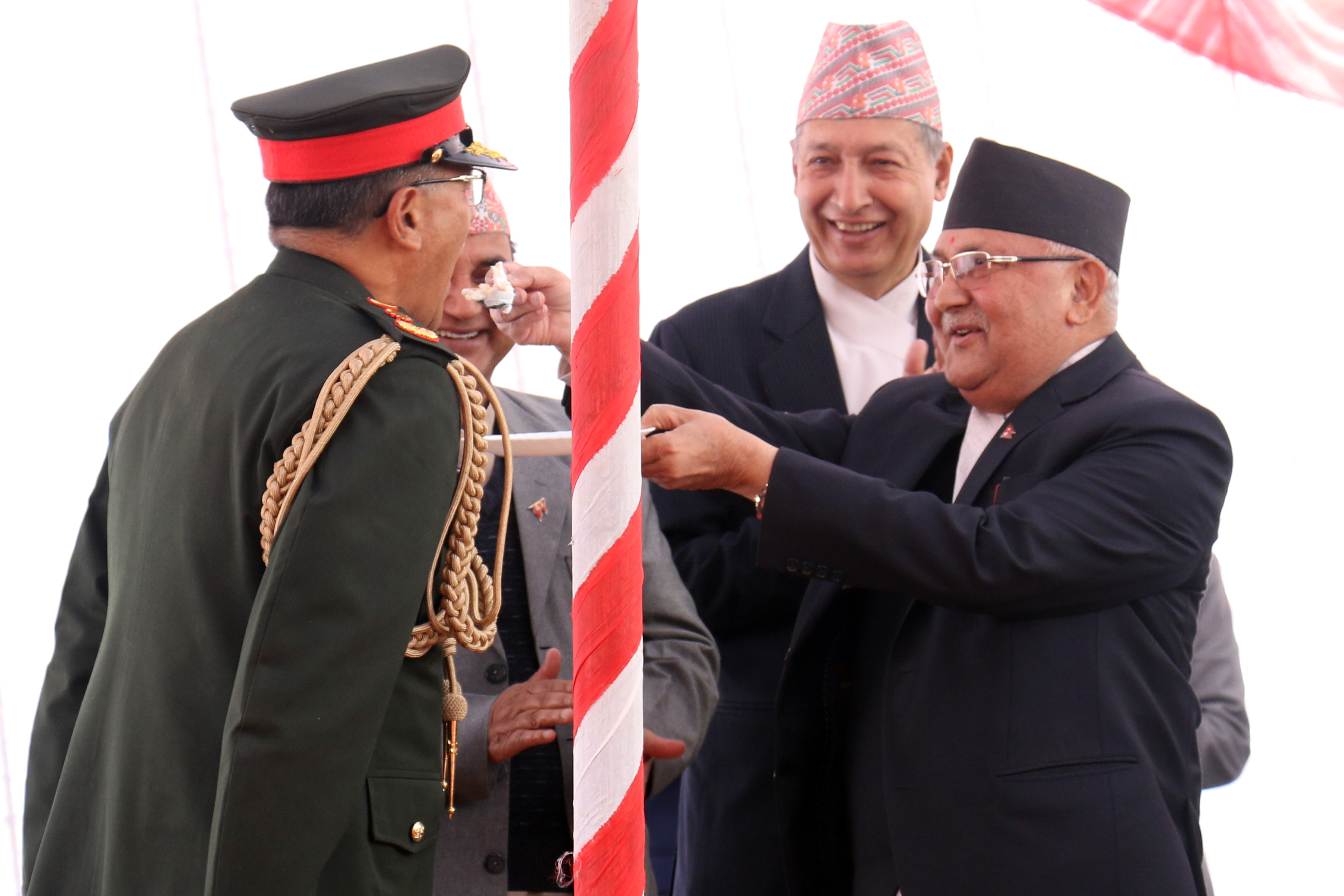
As a result, this is a very important and positive achievement. Things that we need to focus on this are respecting and protecting sovereignty, independence and territorial integrity. Just before it, the group that had come across by regarding the same as its objective and demand, its movement and slogan, now says that it is its duty to protect territorial integrity. They have agreed to move ahead through the process of taking decisions within the parameters of the Constitution, through the constitutionally enshrined people’s mandate and to join today’s mainstream politics of national politics. That is a very big thing.
May be some people have expressed their dissatisfaction, what runs inside people’s mind or what their goals are, is a different matter. They must be concerned with individual disenchantment or with personal goals. Some have also raised questions such as why was it brought forward? Why was it given importance? Why a status was accorded? Though it may seem small, the matter of disintegration is very poisonous, very dangerous thing. If such matters are dealt with, then it is a very important aspect.
And questions are also heard being raised on what does moving ahead as per the people’s abhimat or mandate means. How would a democracy that does not run as per the people’s mandate be like? I don’t understand. How would democrats be like who don’t run as per the people’s mandate? What does people’s mandate today means? The people’s mandate today will be clear if we look at the 2062/63 people’s movement or the developments since then or the Constitution that was promulgated by the Constituent Assembly. The people’s mandate today means federal democratic republic, a democratic system. People’s mandate today means the building of those structures. People’s mandate today means a strong majority government, which we achieved through a long struggle. That is people’s mandate of today.
The people are sovereign, they decide what they want. Some people are talking as if the word referendum should not be uttered at all. Referendum is the greatest form of a democratic exercise, but what is referendum held for? Can a question to disintegrate the country stand as a question? Does a referendum take place anywhere at any time on the question to whether disintegrate a country? Can any questions be raised on the territorial integrity of a country? Then can people’s mandate be termed as referendum, and will it be a referendum over such questions? 
Referendum could be held on questions that would not harm the territorial integrity, sovereignty and independence of the country, within those parameters and within the democratic parameters. If people want a referendum at any point of time then it can be held but a referendum cannot be held on the question of the existence of the nation, on national unity, on people’s sovereignty and on the question of independence. Referendum cannot be held on such questions. A referendum cannot take place on the question of territorial integrity. Referendum can be held on matters favouring democracy, in favour of national unity, and on matters that do not raise a question on sovereignty, independence and territorial integrity, and on questions that do not raise communal hatred. Referendum is not an undemocratic subject, there is no need to carry any illusion over it. But the agreement that the government reached at present to bring a group holding secessionist views into national politics does not include the word referendum. It is not there because the context and instance of referendum are not associated with it. If the demand of that group was continuous, then the demand of the group would not be accepted to the Nepal state, to the Nepal government and to the Constitution of Nepal. Acceptance was and is on the matter of giving up (the demand). As a result, they were made to give it up with that agreement. I am wondering why some people are saddened by it. Why they are gasping like a fish taken out of water. Why they have been hurt? What is the restlessness about? Why is it hard for them to see an end to secessionism? There is no need to become like that. The Nepali people in general, and the Nepal nation as a whole, barring for some elements, have understood it positively, and rightly, taken it positively and this is a very big achievement.